
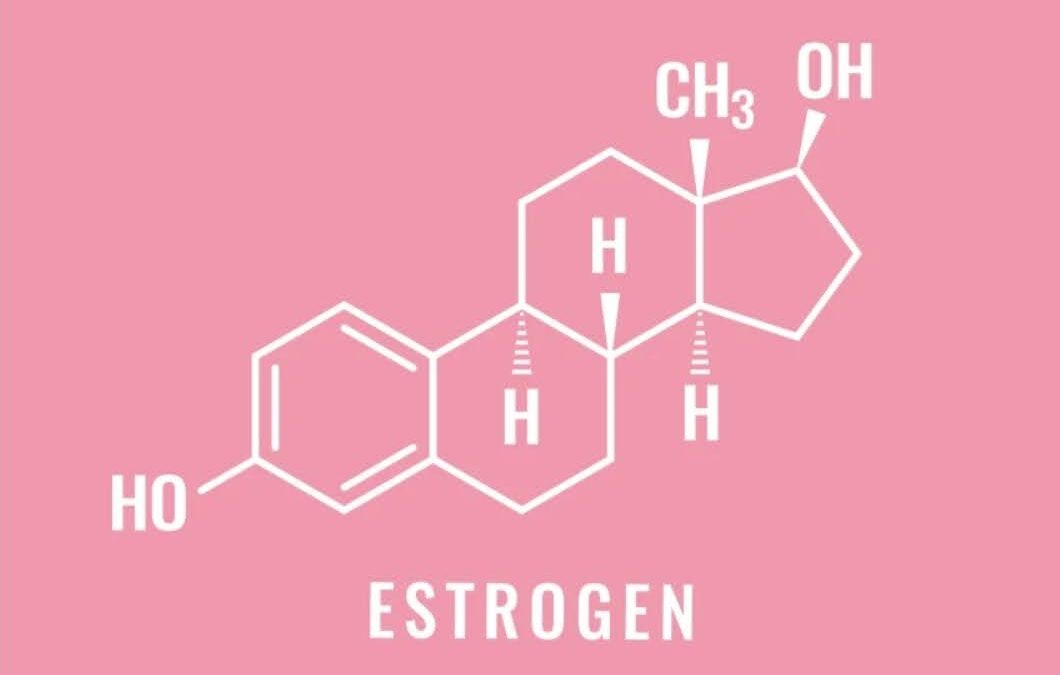
As a physio in Ballito, treating many women over 40, it has become very clear to me that oestrogen has a huge impact on the musculoskeletal system. In the past, most of the research was on the link between oestrogen and bone density. However, in the last few years the effect of oestrogen on muscles, tendons, and ligaments has become more of the focus. These studies make it clear that oestrogen improves the balance of proteins in the muscles and increases collagen content.
This also means that a lack of oestrogen is going to result in less protein in the muscles and less collagen in the connective tissues of the joints and collagen is important because it is a primary building block of the body. Oestrogen directly affects muscle mass and strength. Therefore lower levels of oestrogen means the muscles and connective tissue are more prone to injury and regrowth is limited (McClung et al., 2006).
Hormone replacement therapy (HRT) is widely recommended for women to counteract some of the negative aspects of menopause (Enns and Tiidus, 2010). There are some important benefits of HRT for muscle performance and in one study, maximum walking speed, thigh muscle composition, vertical jumping height, hand grip and knee extension strength was measured in 16 identical twin pairs. One twin was on HRT and the other was not. Maximal walking speed, vertical jump height and relative thigh muscle area were greater in the HRT twins than in their sisters. Oestrogen levels were also 5 times higher in the twins on HRT, regardless of whether the women were taking only oestrogen or oestrogen and progesterone (Ronkainen et al., 2009).
In another study Sipilä et al. (2001) randomly assigned 80 postmenopausal women to 4 groups: exercise, HRT, exercise with HRT and no treatment for a year. At the end of the year, the exercise with HRT group showed increases in muscle cross-sectional area (7.1%), knee extension torque (8.3%), and vertical jump height (17.2%). A smaller increase in vertical jump height (6.8%) and muscle cross-sectional area (6.3%) was found in the HRT only group. There was also a higher percentage of fat within the quads in the no treatment group compared to the HRT groups.
Shultz et al. (2005) found that knee laxity (flexibility) increased in direct proportion to oestrogen levels. When oestrogen increased during the menstrual cycle, knee laxity increased as well (Shultz et al., 2010, 2011, 2012a). They found as big a difference as between 1 and 5 mm in knee laxity between the first day of menstruation and the day following ovulation. Lastly, Park et al. (2009) found a 17% decrease in knee stiffness during ovulation.
This is especially relevant to me as a physio in Ballito having seen so many women between 50 and 65 years of age with frozen shoulders for no specific reason, for more information on frozen shoulders see my blog https://www.amystranackphysio.co.za/frozen-shoulder/
The focus must not only be helping with the frozen shoulder but also enquiring about whether the patient has taken or is currently on HRT. It is very important to refer to a GP who specialises in female hormones to address the root of the issue which is the oestrogen levels. This also applies to women over 40 years old who present with multiple soft tissue problems with no major, specific incident and who are frustrated because they feel like when one problem ends another one begins.
A tendon transmits the force made by a muscle to the bone. If a tendon becomes too stiff this produces a strain on the muscle. This means more of the stretch produced in a movement affects the muscle that is connected to a stiff tendon than a muscle attached to a stretchy tendon. In other words, instead of the tendon stretching while the muscle contracts (Griffiths, 1991), a stiff tendon doesn’t stretch, and the muscle is forced to lengthen. The result is that a muscle attached to a stiff tendon will experience more load and is more likely to get injured than a muscle attached to a stretchy tendon.
As you can see from the earlier paragraph on the link between oestrogen and the flexibility of soft tissue, lower oestrogen levels will cause tendons to be more stiff and predispose muscles and tendons to tearing.
In menopausal and postmenopausal women hormone replacement therapy also improves muscle mass and function by helping the body repair muscles better, and improves the muscles’ response to food and exercise. (Zhao et al., 2015).
I hope this article helps you better understand why oestrogen could be the key to why you might feel like you are fighting a losing battle with your body or why you keep facing one injury after another. And gives you a plan going forward to take control of your body.
For additional reading check out this great article:
- Enns D. L., Tiidus P. M. (2010). The influence of estrogen on skeletal muscle. Sports Med. 40, 41–58. 10.2165/11319760-000000000-00000 [DOI] [PubMed]
- Griffiths R. I. (1991). Shortening of muscle fibres during stretch of the active cat medial gastrocnemius muscle: the role of tendon compliance. J. Physiol. 436, 219–236. 10.1113/jphysiol.1991.sp018547 [DOI] [PMC free article] [PubMed]
- McClung J. M., Davis J. M., Wilson M. A., Goldsmith E. C., Carson J. A. (2006). Estrogen status and skeletal muscle recovery from disuse atrophy. J. Appl. Physiol. 100, 2012–2023. 10.1152/japplphysiol.01583.2005 [DOI] [PubMed]
- Nkechinyere Chidi-Ogbolu et al (2019). Effect of Estrogen on Musculoskeletal Performance and Injury Risk. Front Physiol. 2019 Jan 15;9:1834. doi: 10.3389/fphys.2018.01834
- Ronkainen P. H., Kovanen V., Alén M., Pöllänen E., Palonen E. M., Ankarberg-Lindgren C., et al. (2009). Postmenopausal hormone replacement therapy modifies skeletal muscle composition and function: a study with monozygotic twin pairs. J. Appl. Physiol. 107, 25–33. 10.1152/japplphysiol.91518.2008 [DOI] [PubMed]
- Shultz S. J., Sander T. C., Kirk S. E., Perrin D. H. (2005). Sex differences in knee joint laxity change across the female menstrual cycle. J. Sports Med. Phys. Fit. 45, 594–603. 10.1249/00005768-200405001-00719 [DOI] [PMC free article] [PubMed]
- Shultz S. J., Levine B. J., Nguyen A. D., Kim H., Montgomery M. M., Perrin D. H. (2010). A comparison of cyclic variations in anterior knee laxity, genu recurvatum, and general joint laxity across the menstrual cycle. J. Orthop. Res. 28, 1411–1417. 10.1002/jor.21145 [DOI] [PMC free article] [PubMed]
- Shultz S. J., Randy J. S., Beynnon B. D. (2011). Variations in varus/valgus and internal/external rotational knee laxity and stiffness across the menstrual cycle. J. Orthop. Res. 29, 318–325. 10.1002/jor.21243 [DOI] [PMC free article] [PubMed]
- Shultz S. J., Schmitz R. J., Kong Y., Dudley W. N., Beynnon B. D., Nguyen A. D., et al. (2012a). Cyclic variations in multiplanar knee laxity influence landing biomechanics. Med. Sci. Sports Exer. 44, 900–909. 10.1249/MSS.0b013e31823bfb25 [DOI] [PMC free article] [PubMed]
- Sipilä S., Taaffe D. R., Cheng S., Puolakka J., Toivanen J., Suominen H. (2001). Effects of hormone replacement therapy and high-impact physical exercise on skeletal muscle in post-menopausal women: a randomized placebo-controlled study. Clin. Sci. 101, 147–157. 10.1042/cs1010147 [DOI] [PubMedl]
- Zhao R., Xu Z., Zhao M. (2015). Effects of oestrogen treatment on skeletal response to exercise in the hips and spine in postmenopausal women: a meta-analysis. Sports Med. 45, 1163–1173. 10.1007/s40279-015-0338-3 [DOI] [PubMed]
Recent Comments